When President Bola Ahmed Tinubu swore his oath on May 29, 2023, he did so, basking in his glory as Lagos’ former economy “Jagaban.” No surprise his first moves were towards ameliorating Nigeria’s crippling economy. In the health industry, he set up the Presidential Initiative for Unlocking the Healthcare Value Chain (PVAC). Today, PVAC has achieved a $5 billion project pipeline plus $2 billion in foreign investments [1]. That must be a relatively untapped multimillion-dollar industry Nigeria is sitting on.
The healthcare industry around the world is directed towards one thing: creating value by improving health outcomes. We want the sick to return to their families hale and hearty, safe and sound. In fact, if Nigeria has plans to grow economically—and we must—a healthy population is a lever to attaining such. But one tree cannot make a forest; a single ant cannot make a colony. In the same vein, one field of healthcare cannot unlock Nigeria’s healthcare value chain. It takes concerted effort, interdependence, and intercommunication amongst the many diverse healthcare professionals to reach the heights we dream of.
If you ask me, I would opine that the healthcare industry is the most diverse in terms of professionals it brings together. Therefore, with one goal in sight, the dentist must work with the radiographer. The orthopaedist must work with the physiotherapist. The surgeon must work with the anaesthetist. The psychiatrist must work with the clinical psychologist. The paediatrician must work with the nutritionist. The oncologist must work with the medical lab scientist. All vice versa—everyone must work with one another.
This essay aims to dissect the role of medical laboratory science as one of the vital keys to unlocking the healthcare value chain in Nigeria.
Definitions
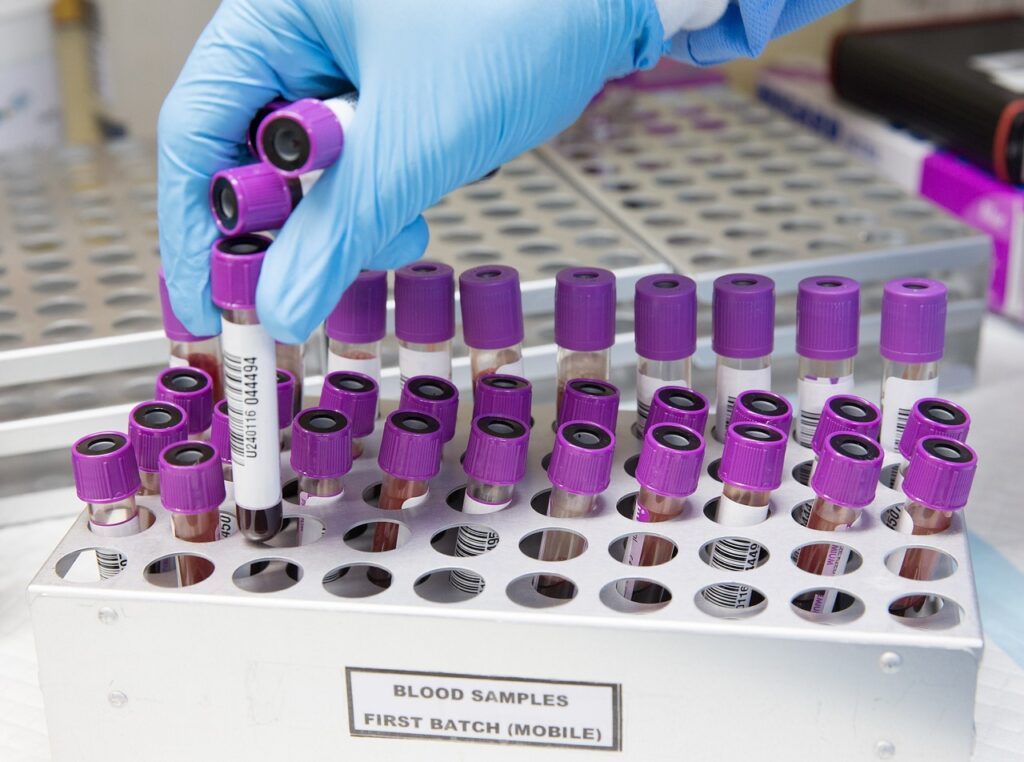
Michigan Technological University defines Medical Laboratory Science (MLS) as the health profession that provides diagnostic services needed to detect and treat disease. The Ohio State University (OSU), however, puts it more appropriately by emphasizing the fact that Medical Laboratory Science does not call it quits at diagnosis; the field is also very important in monitoring the condition of patients for improvement or deterioration. For example, an HIV patient undergoing treatment has to periodically carry out a viral load test to determine how much of the HIV virus is left in his or her body.
OSU defines Medical Laboratory Science as the use of clinical laboratory tests to detect, diagnose, monitor, and treat disease. The healthcare value chain, on the other hand, is defined as the series of interconnected activities and processes—ranging from the development and production of medical products to the delivery of healthcare services—that work together to create value by improving patient health outcomes, enhancing care quality, and increasing efficiency across the healthcare system.
In his 1985 book, Competitive Advantage: Creating and Sustaining Superior Performance, Michael Porter viewed businesses in a different light. He opined that every business makes more margin by increasing the gap between the cost of creating that value and the value itself. Whatever one’s preference, healthcare is a business, and the business side is just as relevant. The question, thus, is: how do fields like Medical Laboratory Science contribute to Michael Porter’s theory of value chain? It is only—and only when—we put this into discussion that we can think of leveraging the existing or even scaling further.
MLS is the Embodiment of Value in Healthcare
I really cannot recall the number of times people have told me about how lucrative my course is. It seems to be the natural follow-up response each time I tell them I am studying Medical Laboratory Science in the university. But this comes as no surprise. After all, ancient thinkers—including India’s Mahatma Gandhi—have long emphasized that health is wealth. Kindly take that literally.
Medical Laboratory Science is one of the big four fields in the healthcare industry, alongside Medicine, Nursing, and Pharmacy. Talk about a field that underpins about 70% of medical decisions, according to the Centre for Disease Control (CDC) [2]. Without medical laboratory scientists, much of clinical decision-making becomes trial and error, and patients will spend more time in hospitals rallying around various treatment options—and as a consequence, they will spend more money. Those patients without fat bank accounts will soon run their pockets—and their family’s—dry. Where, then, is the value chain we are unlocking?
The impact of Medical Laboratory Science cannot be overemphasized. It is why, while donning our lab coat, we often bask in our little bubble as the bedrock of diagnostic medicine—we must not be eroded or shaken. It is why scientists working behind the curtains every day have dubbed themselves the unseen heroes of healthcare. It is why people tell me my course is lucrative.
Again, Medical Laboratory Science brings a tonne of value to the table. And where there is value, there is money—and vice versa. It is thus safe to say that the opportunities this field presents are as wide as the sky, wide enough for all birds to fly without colliding. If, for personal reasons, you do not like bench work, research is there for you. If you are more into people than lab procedures, you can look into public health or health policy.
In today’s fast-paced, high-tech world, MLS does not take a back seat. It is a field that permits you to take a full-fledged dive into the vast world of biomedical informatics, lab automation, or AI in diagnostics. If writing is your thing, MLS could be your passport to becoming a science communicator, a medical writer, or a journal editor. Business-minded? Open a diagnostic lab, launch a medical startup, or consult for biotech firms. Indeed, MLS can “carry you to London,” especially if you have a global mindset—you can get to work with NGOs, WHO, CDC, or contribute to breakthroughs that will impact millions around the world.
How MLS Impacts Nigeria’s Healthcare Value Chain
In the past decade, there have been a lot of viral outbreaks, but none has hit Nigeria as fatally as Ebola. When Liberian Patrick Sawyer came into the country with the deadly virus on July 20, 2014, it was Dr. Stella Adadevoh (of blessed memory) who made the clinical diagnosis, but it also took the effort of LUTH’s Prof. Sunday Omilabu, who sequenced the virus in 36 hours, to confirm the diagnosis [3]. The news of the confirmation must have sent Nigerians into a frenzy then, but it was the wick of the lamp of hope.
Similarly, when COVID-19 arrived on a tour to Africa from the great Europe, it spelt doom for the continent, and consequently, Nigeria. It was thanks to Prof. Christian Happi and his team at the African Centre of Excellence for Genomics of Infectious Diseases (ACEGID) that Nigeria’s index case sample was sequenced within 48 hours—becoming the first lab facility in Africa to do so. [4] This aided diagnosis a great deal, allowing new cases to be identified and managed rapidly before spreading.
Although we can estimate the number of lives that have been saved by early diagnosis, can we accurately estimate the number of families or commuters that have been saved from acquiring these contagious diseases? No. Nigeria would have had to spend so many resources on drugs and facilities had medical lab scientists been nowhere to be found. MLS plays a crucial role in PVAC’s vision of acting “as a catalyst for domestic and regional health security, economic growth and employment.”
In the words of Dr. Mary Ann McLane, the past President of the American Society for Clinical Laboratory Science (ASCLS), medical lab scientists are involved in “the research needed to bring the best that science and technology can offer into the realm of diagnostic reality.” [5] By bringing out the best of science, the field contributes to the upstream segment of the value chain by encouraging innovative product development that could spark waves in the entire healthcare industry. A paradigmatic example is Sentinels, an innovative surveillance framework by ACEGID, designed to detect emerging variants of diseases before they escalate, send the results to a central database, and train rural health workers to identify the variants. [6]
When it comes to capacity-building, MLS takes a front-row seat. Year in, year out, the Medical Laboratory Science Council of Nigeria (MLSCN) inducts thousands of graduates into the workforce. The inductees are obliged to swear “to put the interest and well-being of the patient above my personal interest and convenience” [7] in order to reinforce the quality of the new breed being brought into the workforce, as strengthening and sustaining the nation’s healthcare system.
Conclusion
In unlocking Nigeria’s healthcare value chain, the patients must be at the centre of it all. We need to ensure that patients are indeed receiving value. Let us encourage medical laboratory scientists to grow in what they do best. Let doctors, nurses, pharmacists, radiologists, and all health professionals come together to form a network. Because—as an Ethiopian adage says—when spider webs unite, they can tie up a lion.
References
[1] Nigeria Health Watch, ‘Nigeria’s Health Sector in 2024: Policies, Investments, Partnerships, and Milestones’, Nigeria Health Watch, Abuja, Nigeria Health Watch, 2024, n.p., http://articles.nigeriahealthwatch.com/nigerias-health-sector-in-2024-policies-investments-partnerships-and-milestones/ (accessed 13 June 2025).
[2] ‘FDA and CMS Statement: Americans Deserve Accurate and Reliable Diagnostic Tests, Wherever They Are Made’, CMS.gov, Centers for Medicare & Medicaid Services, 2024, https://www.cms.gov/newsroom/press-releases/fda-and-cms-statement-americans-deserve-accurate-and-reliable-diagnostic-tests-wherever-they-are (accessed 13 June 2025).
[3] ‘Ohiaeri: How Sawyer Brought Ebola to Our Hospital and Ruined Our Lives’, TheCable, TheCable, 2014, https://www.thecable.ng/patrick-sawyer-brought-ebola-hospital-ruined-lives/2/ (accessed 13 June 2025).
[4] Chibuike Alagboso, ‘ACEGID in Ede: Science Capacity evolving in Nigeria from an unusual Location’, Nigeria Health Watch, Nigeria Health Watch, 2020, https://articles.nigeriahealthwatch.com/acegid-in-ede-science-capacity-evolving-in-nigeria-from-an-unusual-location/ (accessed 13 June 2025).
[5] Rodney E. Rohde, ‘The Hidden Profession That Saves Lives’, Elsevier Connect, Elsevier, 2020, https://www.elsevier.com/connect/the-hidden-profession-that-saves-lives (accessed 13 June 2025).
[6] Allessandra DiCorato, ‘A New Viral Surveillance System in West Africa Is Showing the World How to Prevent the Next Pandemic’, Broad Institute, Broad Institute, 2024, https://www.broadinstitute.org/news/new-viral-surveillance-system-west-africa-showing-world-how-prevent-next-pandemic (accessed 13 June 2025).
[7] ‘Rules of Professional Conduct for Medical Laboratory Scientists, Medical Laboratory Technicians and Medical Laboratory Assistants – 2014’, Official Gazette, Federal Republic of Nigeria, 2014, p. B753, https://web.mlscn.gov.ng/wp-content/uploads/2018/05/a6f40a657de95beba08ef9e82e30218d.pdf (accessed 13 June 2025).
Very educative post!